Regulation and the Limits of Automation: Leading beyond PR24 to PR29: Strategy, AI and Human Judgement
The "Regulation and the Limits of Automation: Leading Beyond PR24 to PR29" workshop with Dr Melvyn Weeks is...
At VISION Consulting, we believe organisations succeed or struggle based on how people work together. Not just through strategy, systems, or following processes, but through the everyday conversations where concerns are explored, requests are made, promises are given, decisions are made and work moves forward or stalls.
Because neither processes nor data are responsible for getting work done. People are.
People do not work through process maps alone. They work through conversations, relationships, trust, commitments, and shared interpretations about what matters.
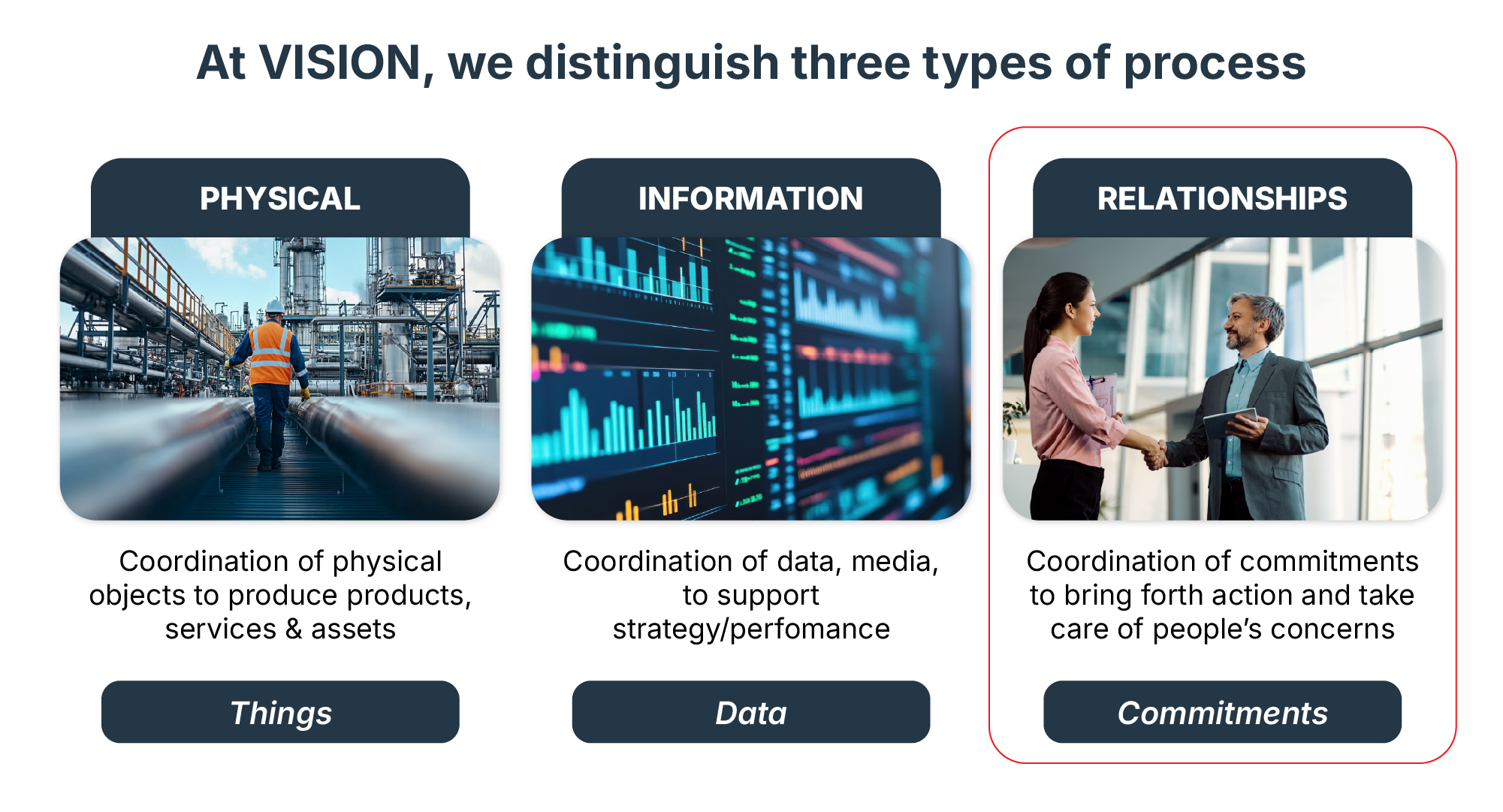
At VISION, we distinguish three interconnected types of process within organisations: physical processes, information processes, and relationship processes. Physical processes coordinate materials, equipment, and assets. Information processes coordinate data, schedules, reporting, and decisions. Relationship processes coordinate action through conversations, commitments, trust, and shared understanding between people.
Traditional management approaches have focused primarily on improving physical and information processes. Commitment-Based Management™ focuses on strengthening the quality of relationship processes because this is where coordination either succeeds or breaks down in practice.
When coordination breaks down, the effects are immediate and familiar. Commitments become vague. Accountability weakens. Decisions drift, handoffs fail, moods dip, blame replaces ownership, and performance slows down, while costs rise.
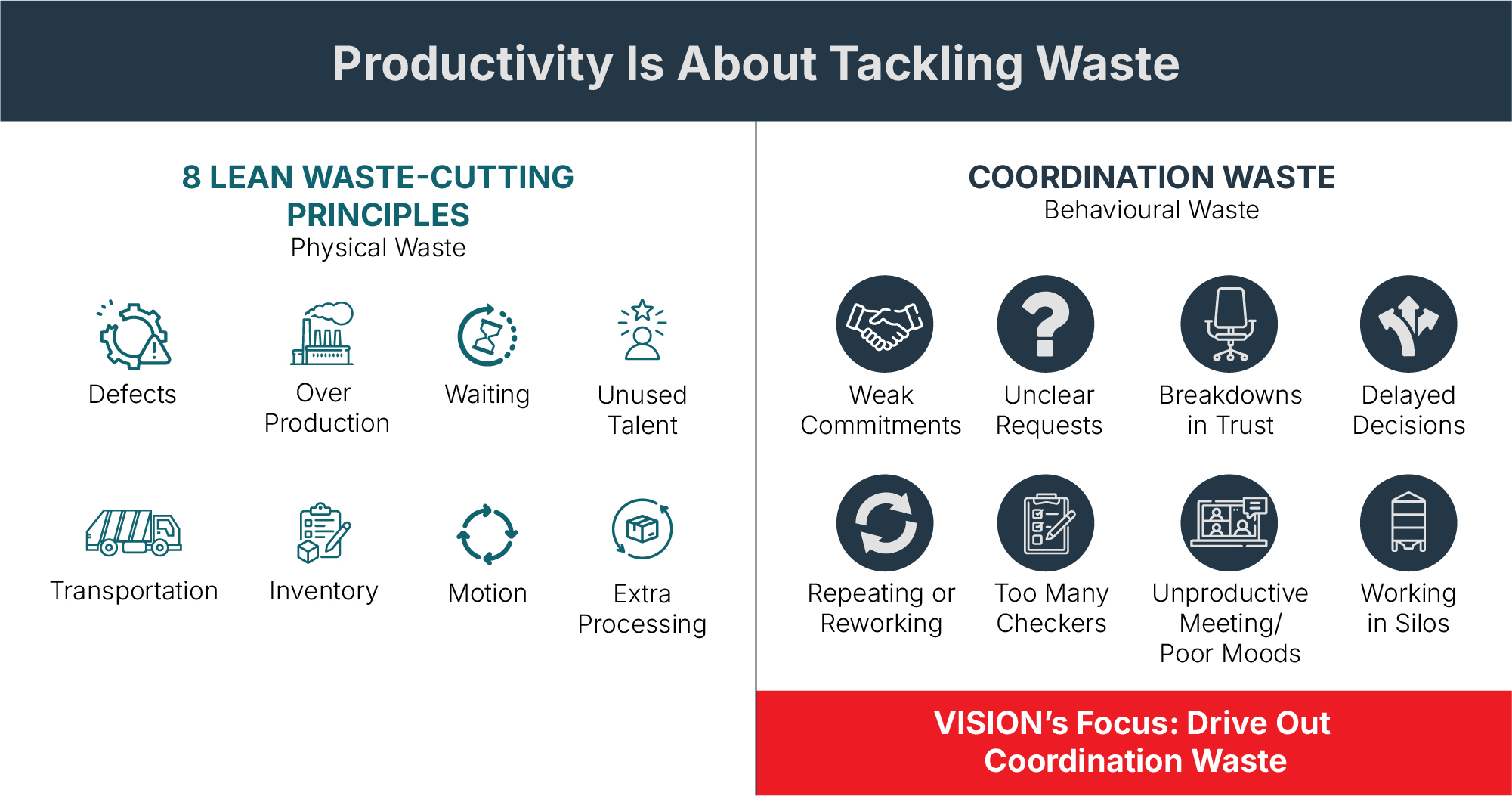
This hidden friction rarely appears in dashboards or reporting structures, yet it is often one of the greatest sources of waste inside an organisation. We call it ‘Coordination Waste’, sometimes referred to as behavioural waste, because it emerges through the breakdowns in communication, coordination, trust, and commitment that slow organisations down every day.
Coordination waste often appears in the form of weak commitments, unclear requests, delayed decisions, repetitive rework, ineffective meetings, excessive chasing, poor handoffs, low trust, and teams working in silos. While these issues are frequently treated as isolated operational problems, they are often symptoms of deeper coordination breakdowns between people and teams.
Traditional operational improvement approaches have focused primarily on reducing physical and process waste, Commitment-Based Management™ focuses on identifying and reducing the behavioural and coordination breakdowns that prevent organisations from executing effectively together.
Commitment-Based Management™ (CbM) is VISION’s approach to improving organisational performance by strengthening how people coordinate action together.
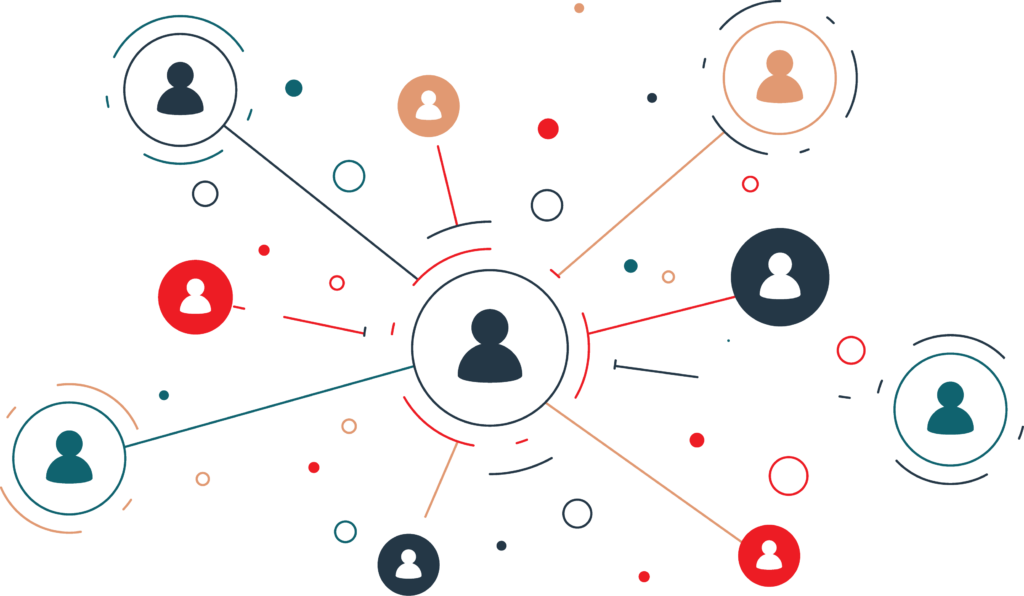
Originally pioneered in the 1980s by Dr. Fernando Flores, alongside Professor Terry Winograd at Stanford University, and influenced by the work of philosophers Hubert Dreyfus and John Searle at UC Berkeley, Commitment-based Management introduced a radically different way of understanding organisations: not simply as systems, hierarchies, or workflows, but as ‘Networks of Commitments’.
The practice gained global recognition when Professor Donald N. Sull of MIT and VISION Emeritus Director, Charles Spinosa featured it in Harvard Business Review in 2007, highlighting its unique ability to drive accountability, coordination, and results.
At its core, Commitment-based Management™ recognises that work happens through language. Every project, decision, and deliverable depends on conversations: requests, promises, offers, declarations, assessments, negotiations, and commitments.
These conversations shape how people coordinate, what they believe is possible, and whether commitments are fulfilled with clarity and trust. Explore how speech acts such as requests, promises, declarations, and assessments shape coordination and execution in complex organisations in Speech Acts: Driving Efficiency Through the Language of Action
For over 40 years, VISION has applied and evolved these principles across complex global programmes, major capital projects, organisational transformations, and national crisis responses. Our work has helped organisations accelerate project delivery, reduce cost, improve productivity, speed-up decision-making, and increase confidence in execution in highly complex environments.
In many organisations, conversations are reduced to exchanges of information: updates, reports, status reviews, and explanations. But high-performing teams use conversations differently. They use them to coordinate action, negotiate commitments, surface concerns, build trust, and create shared understanding around what success looks like.
Commitment-Based Management™ recognises that organisations do not simply operate through activities and tasks, but through networks of commitments between people and teams. A commitment is more than an intention or assigned task. It is a negotiated promise about what will be delivered, by when, and to what standard. Instead of:
“I’ll try to get it done.”
Commitment-Based Management™ creates conversations like:
“I can’t deliver that by Friday, but I can deliver it by Tuesday with the quality required.”
That shift changes everything.
When conversations improve, execution improves. Better conversations lead to clearer commitments, faster coordination, stronger accountability, less chasing, and fewer breakdowns during delivery. Clear commitments create stronger ownership, improved reliability, greater trust across teams, and earlier visibility of risks and constraints.
Many organisations spend enormous energy firefighting during execution when the real problem began much earlier: unclear requests, vague commitments, assumptions that were never negotiated, or promises that were never made explicit. When commitments remain invisible, organisations rely on optimism and interpretation. When commitments become visible, teams can coordinate proactively and respond faster when reality changes.
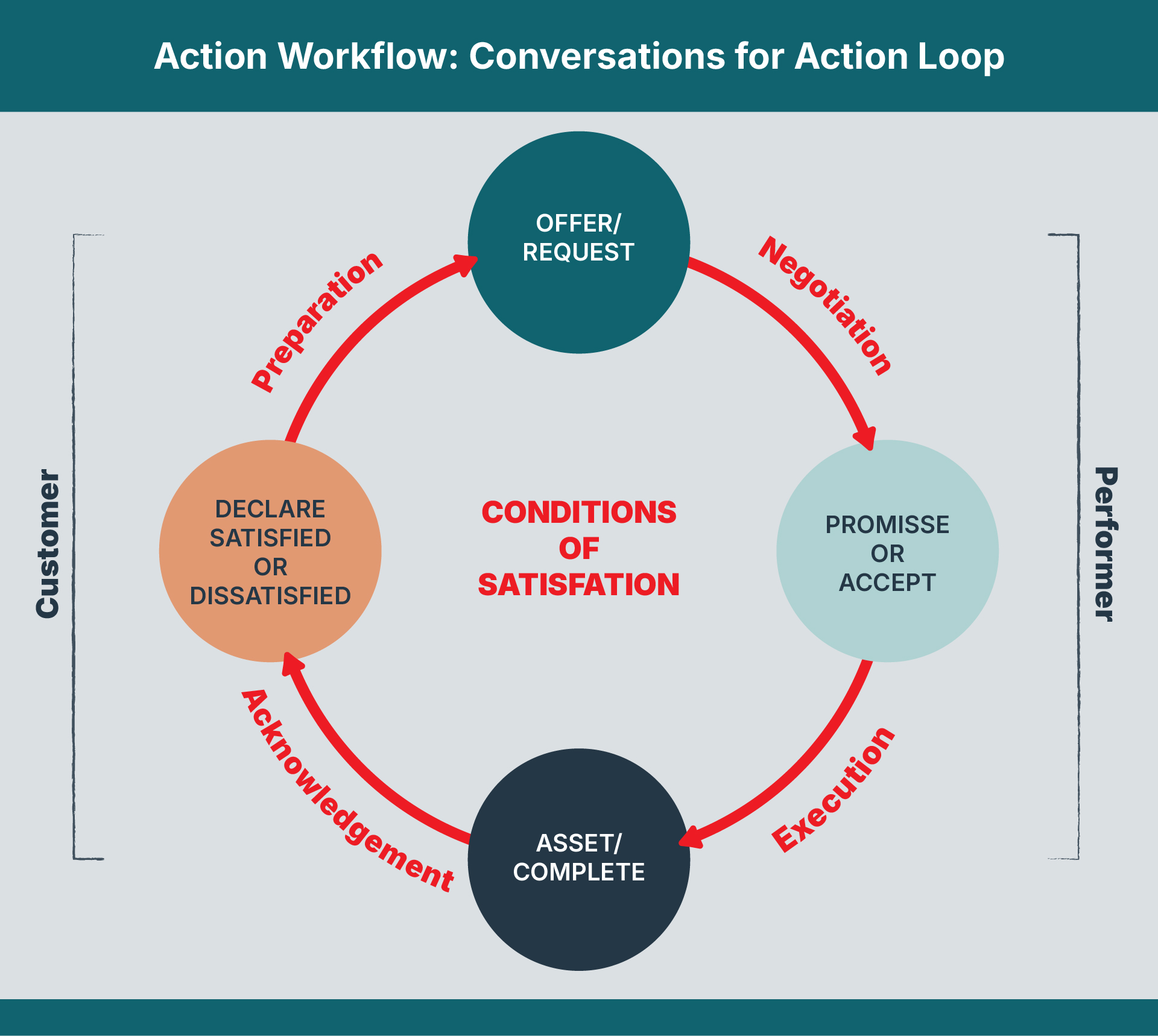
At VISION, we use practical frameworks such as the “Conversation for Action Loop” and Network of Commitments mapping to identify where coordination is weak, where critical promises are missing, and where work is getting stuck between teams, functions, or leadership layers.
At VISION, we view culture not as sentiment or values alone, but as the operating system of execution.
Culture shows up in the practical realities of organisational life: how decisions are made, how commitments are negotiated, how issues are escalated, how handoffs happen, how teams coordinate under pressure, and how quickly organisations recover when conditions change.
In many organisations, performance problems appear long before KPI’s reveal them. Decisions are revisited rather than resolved. Gates become reporting moments instead of real commitment points. Teams work hard but without a common operating rhythm. Risks remain hidden until deadlines slip or costs escalate.
Commitment-Based Management™ helps make these dynamics visible and actionable.
One of the most overlooked organisational capabilities is listening. In Commitment-based Management™, listening is not treated as passive hearing. It is an active and trainable skill that shapes how people interpret situations, understand concerns, identify risks, and recognise possibilities.
Most people listen for confirmation. They hear what aligns with their existing assumptions. We help organisations develop a deeper form of listening:

Because people do not respond only to words, they respond to what they believe is expected, possible, meaningful, urgent, or safe. The quality of listening directly affects the quality of coordination.
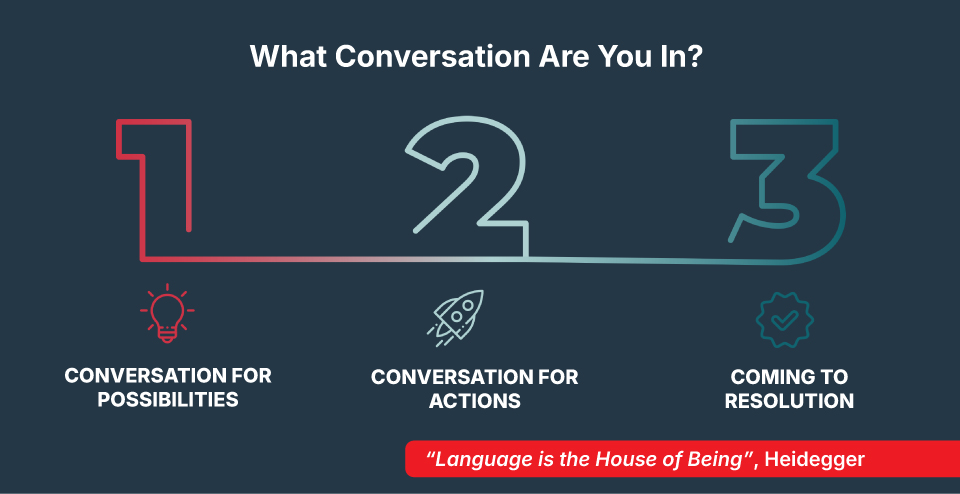
Many organisational breakdowns occur not because people are unwilling to communicate, but because they are having different kinds of conversations without realising it. A discussion intended to explore possibilities becomes a debate about solutions. Coordination conversations become reporting sessions. Decisions become unresolved analysis. High-performing teams learn to recognise what conversation they are in, what conversation is needed, and when conversations are being confused or mixed together.
Learn more about how listening shapes success in project delivery.
Every organisation has moods.
Ambition. Curiosity. Optimism. Resignation. Cynicism. Frustration. Possibility.
These moods are not simply emotions; they shape how people engage with work, whether they speak up, how they respond to challenges, and what they believe can be achieved.
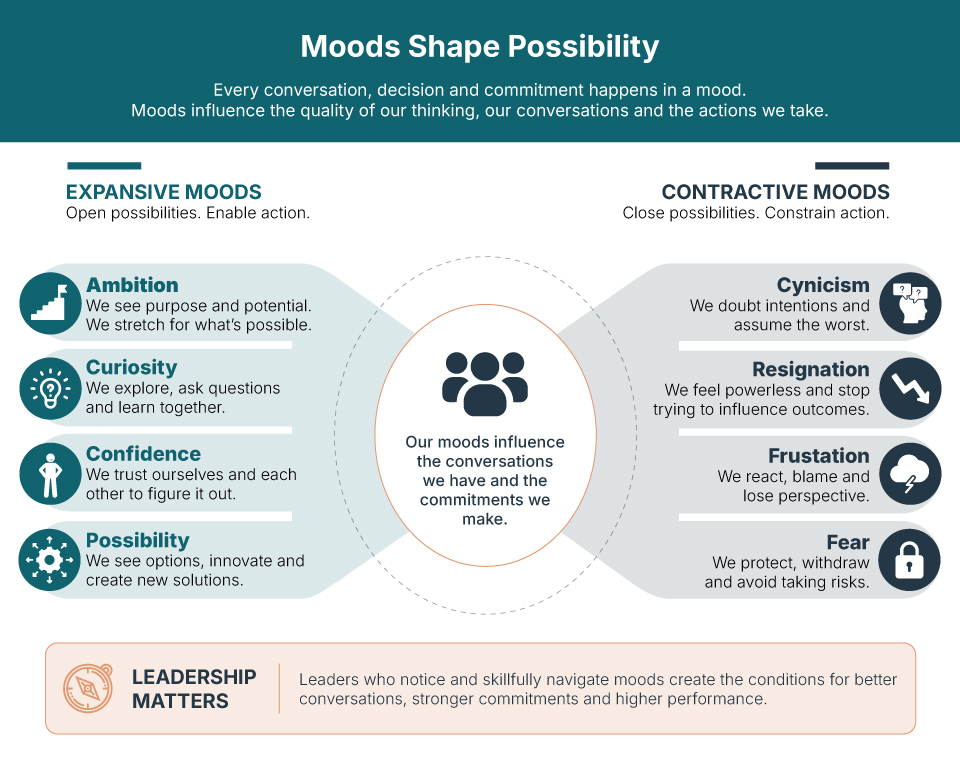
A mood of ambition or curiosity opens new possibilities for coordination and innovation. A mood of resignation or cynicism closes them down.
Moods influence collaboration, resilience, accountability, innovation, and performance. They are also contagious.
At VISION, we help leaders recognise and work skilfully with organisational moods so that teams can have better conversations, navigate difficult challenges more effectively, and sustain momentum through change.
Find out more about the building blocks of culture; moods, style and conveying practices.
Trust is fundamental to effective coordination and high-performing teams. In Commitment-based Management™, trust is not viewed as a soft or abstract concept, but as a practical organisational capability that can be intentionally built, strengthened, and repaired over time through conversations and shared action. Drawing on the work of Fernando Flores, we recognise that trust operates across multiple domains, including care, competence, and integrity: confidence that people are aligned around shared outcomes, capable of delivering on commitments, and sincere in what they say and do.
When trust is strong, teams communicate more openly, surface risks earlier, coordinate more effectively, and move with greater confidence and speed. When trust breaks down, defensive behaviours emerge, commitments weaken, and organisations often become trapped in cycles of delay, rework, and unnecessary coordination waste. Learn more about how trust shapes coordination, collaboration, and performance in integrated project teams.
We believe meaningful change does not happen through explanation alone. It happens through practice.
That is why our work focuses on developing practical disciplines that teams can apply every day: making stronger commitments, improving handoffs, strengthening decision-making, surfacing breakdowns early, improving gate integrity, reducing decision latency, and coordinating action more effectively.
We embed these disciplines into the operating cadence of the organisation through practical routines such as daily huddles, weekly reviews, rolling planning, learning loops, and coaching-in-action. Read more about the practical implementation of these pratices in a recent Case Study Building Faster, Together: How VISION is Transforming Collaboration in UK Water Infrastructure
Rather than creating dependency, our approach helps organisations build sustainable capability from within. Our work is practical, measurable, and action-oriented. We move quickly, learn through real-world application, and continuously adapt based on outcomes.
When organisations improve the way people coordinate action, performance changes.
Teams become more aligned. Decisions move faster. Accountability strengthens. Trust improves. Productivity rises. People feel more connected to their work and to one another.
Over four decades, VISION has helped organisations across infrastructure, utilities, healthcare, energy, finance and complex operational environments achieve measurable improvements in delivery performance, productivity, cost reduction, and execution confidence. Read more about the impact and outcomes we’ve delivered with our clients.
Most importantly, organisations develop the ability to move forward together with greater clarity, resilience, and purpose. Because sustainable performance is not created by process alone. It is created through the quality of conversations, commitments, and relationships that make work happen every day.
Explore how Commitment-Based Management™ helps organisations mobilise teams, accelerate delivery, and transform execution in complex environments.